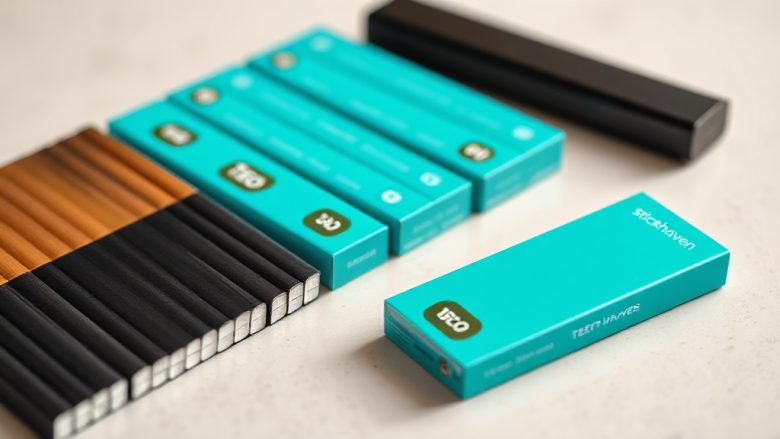
Learning to Evaluate a TEREA Turquoise Offer
Buying heated tobacco sticks online is a skill, not a gamble. The search intent behind “TEREA Turquoise” is usually to buy or compare, so the practical answer is simple: judge a listing by the product identity, the seller’s clarity, and the delivery terms, not by the loudest price. In the next few minutes you will learn a handful of habits that make any TEREA Turquoise offer easier to read calmly and compare fairly.
Treat each habit as a small module you can practise on any listing you open. None of them require technical knowledge. They only require you to slow down for a moment and check what is actually in front of you.
Module One: Read the Product Identity Before the Price
Price is the first thing most shoppers notice, which is exactly why it should be the last thing you judge. Start with identity: the exact product name, the pack format, and the device family the sticks are made for. TEREA sticks are designed for IQOS ILUMA devices, so a listing should make that compatibility explicit rather than leaving you to guess.
A reliable listing names the variant clearly and keeps the description consistent with the title. If the page calls the product Turquoise in one place and something else in another, that inconsistency is a signal to slow down, not a reason to assume the worst.
What to check in the first thirty seconds
- The product name matches the variant you intended to look at.
- The pack size and quantity are stated in plain numbers.
- The compatible device family is mentioned without vague wording.
- The flavour description is short and factual rather than dramatic.
Product identity is the foundation of every fair comparison. If two listings describe different things, their prices were never comparable in the first place.
Module Two: Judge the Seller’s Clarity, Not Their Confidence
Confident wording is cheap; clear information is not. A seller worth your attention explains how ordering works, what the delivery window looks like, and what happens if something goes wrong. You are looking for plain answers to plain questions, not promises that sound impressive but say nothing.
This is where many adult shoppers pick up a useful habit: read the surrounding pages, not just the product page. A store that specialises in heated tobacco sticks and names the brands it carries is easier to assess than a page that appears to sell everything at once. Stickhaven, for example, positions itself around original IQOS and GLO tobacco sticks, which tells you what kind of shop you are dealing with.
Signals of a clear seller
- Ordering steps are described in ordinary language.
- Delivery expectations are stated before checkout, not after.
- Product pages stay consistent across variants and brands.
- Contact or support information is easy to find.
None of these signals guarantee a perfect purchase on their own, but together they reduce the number of unknowns. Clarity is the closest thing to a preview of how a seller behaves after you pay.
Module Three: Compare Offers on the Same Terms
Comparing is a skill with one rule: change one thing at a time. If one offer is for a single pack and another is for a multipack, the headline prices tell you nothing useful. Bring both offers onto the same footing by checking quantity, pack format, and delivery cost before you form an opinion.
A simple comparison table helps more than memory does. Write down what each listing actually promises, then look at the numbers side by side. The exercise takes two minutes and prevents most of the regret that comes from rushed decisions.
| What to compare | Why it matters |
|---|---|
| Pack quantity | Prevents single-pack versus multipack confusion |
| Delivery cost and window | Shows the real total and the real waiting time |
| Variant accuracy | Confirms you are comparing the same product |
| Seller specialisation | Indicates how familiar the shop is with the category |
A fair comparison keeps every variable except one fixed. Once you adopt that habit, discount headlines lose much of their power to distract you.
Module Four: Check Freshness, Storage and Pack Condition
Heated tobacco sticks are a consumable, so condition matters as much as variety. A listing should give you confidence that packs are stored sensibly and shipped in a way that protects them. You do not need laboratory detail; you need to know that the seller treats the product as something perishable rather than indestructible.
Look for language about sealed packs, protective packaging, and dispatch timing. If a page says nothing at all about how the product is handled, that silence is worth noticing. It does not prove a problem exists, but it leaves you with one more unknown to weigh.
Questions worth asking yourself
- Does the listing describe packs as sealed and intact?
- Is dispatch timing mentioned in clear terms?
- Does the packaging description suggest protection during transit?
- Would I be comfortable receiving this exactly as described?
Condition is part of the product, not a bonus feature. A careful shopper reads storage and shipping details with the same attention as the flavour description.
Module Five: Build a Repeatable Decision Routine
Skills stick when they become routines. The final habit is to turn the previous modules into a short checklist you run every time, so that evaluating an offer stops feeling like a fresh decision each time. The routine should take a few minutes and end with a clear yes, no, or not yet.
Start with identity, move to seller clarity, compare on equal terms, and finish with condition. If any step leaves a meaningful question unanswered, the honest answer is “not yet” — and that is a valid outcome. Waiting a day costs nothing; correcting a rushed order costs more.
Your five-step practice routine
- Confirm the product name, variant and compatible device family.
- Read how ordering, delivery and support actually work.
- Normalise quantity and delivery cost before comparing prices.
- Check pack condition and dispatch details.
- Decide yes, no, or not yet — and write down why.
Practise this on three listings in a row and you will notice the process speeding up. The goal is not to become suspicious of every seller, but to become fluent at reading what a page actually says.
Good buying decisions come from repeatable habits, not from lucky timing. Once the routine is familiar, evaluating a Turquoise offer becomes a calm, ordinary task rather than a stressful one.
To summarise the practice: read identity first, judge clarity second, compare on equal terms third, check condition fourth, and close with a written decision. Run those five habits consistently and you will compare sellers with more confidence and far less second-guessing.